
What if your restocking was circular?
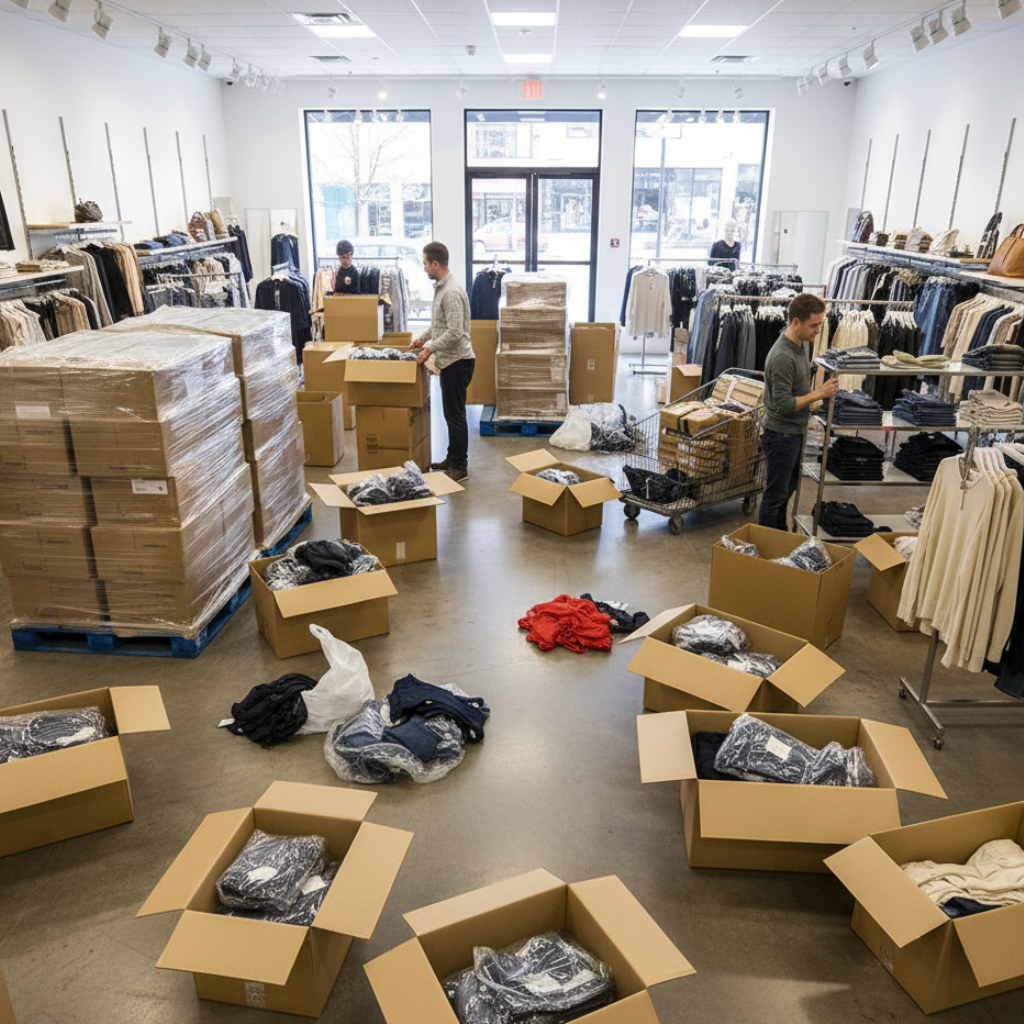
In most stores, restocking and transfers between locations always follow the same pattern. A product is out of stock in one store, so a few items are sent from another location or from the warehouse, often hastily, in boxes bought or salvaged here and there. These boxes are taped, labeled, shipped, opened, and thrown away. Then the same thing starts all over again the next day.
This constant choreography has a colossal hidden cost. Each cycle requires employee time to repackage a box, seal it, reopen it, manage waste, and store the products. It also generates invisible losses: crumpled products, torn secondary packaging, or items damaged in transit. All of this adds up, especially when inter-store transfers become more frequent.
It is in this context that shuttle boxes appear. At first glance, it is simply a foldable and reusable container. In reality, it is a logistical tool that changes the way we work. 
When a chain of stores adopts a standardized box, everything becomes smoother. The format is familiar, the procedures are simple, labeling is always done in the same place, and the closure is reliable. Teams become faster and more comfortable. And the product arrives in perfect condition, ready to be placed on the shelf.
What often surprises pilot retailers is the natural reorganization the box necessitates. The back office becomes cleaner. Return processes are simplified. Inventory turnover improves. And logistics tracking, when linked to a simple QR code, finally allows for measuring stock rotation, losses, and breakages. The box is no longer just packaging; it's a reusable logistics unit that operates within the loop.
The economic benefits are as much financial as they are environmental. When a product is shipped in a reusable box, that's one less cardboard box that needs to be ordered, stored, and paid for. When a retailer eliminates thousands of single-use boxes, it projects a brand image that is more consistent with customers' environmental expectations and regulatory requirements. In France, the AGEC law already mandates a target of 10% reusable packaging by 2027. It's best to plan ahead.
The return trip, often seen as a hindrance, becomes an advantage. A collapsible box takes up very little space on the return journey. It can travel in existing delivery vehicles, on collection routes, or in shared transport systems. Some retailers choose to make it a true recycling tool: full boxes are sent out, empty ones are collected. And the cycle closes, with zero waste.
This type of system can't be implemented overnight, but it also doesn't require a complete overhaul of the supply chain. A test in two or three stores is often enough to prove its effectiveness. A few dozen boxes, a few weeks of monitoring, and the numbers speak for themselves: less breakage, less tape, less mess, and smoother logistics.
In a world where everything moves fast, the shuttle box is a relatively simple solution. It doesn't promise a technological miracle, but it brings common sense back to everyday operations. It transforms a mundane task into a controlled, clean, and sustainable process.
And sometimes, it's in these kinds of small changes that we gain the most.